Style & Presence · August 1, 2026 · 6 min read
Your First Trip to a Tailor: What to Bring, What to Say, What It Costs
Tailoring is the cheapest upgrade in your wardrobe and the most intimidating to start. Here's the script, the price ranges, and what can't be fixed.
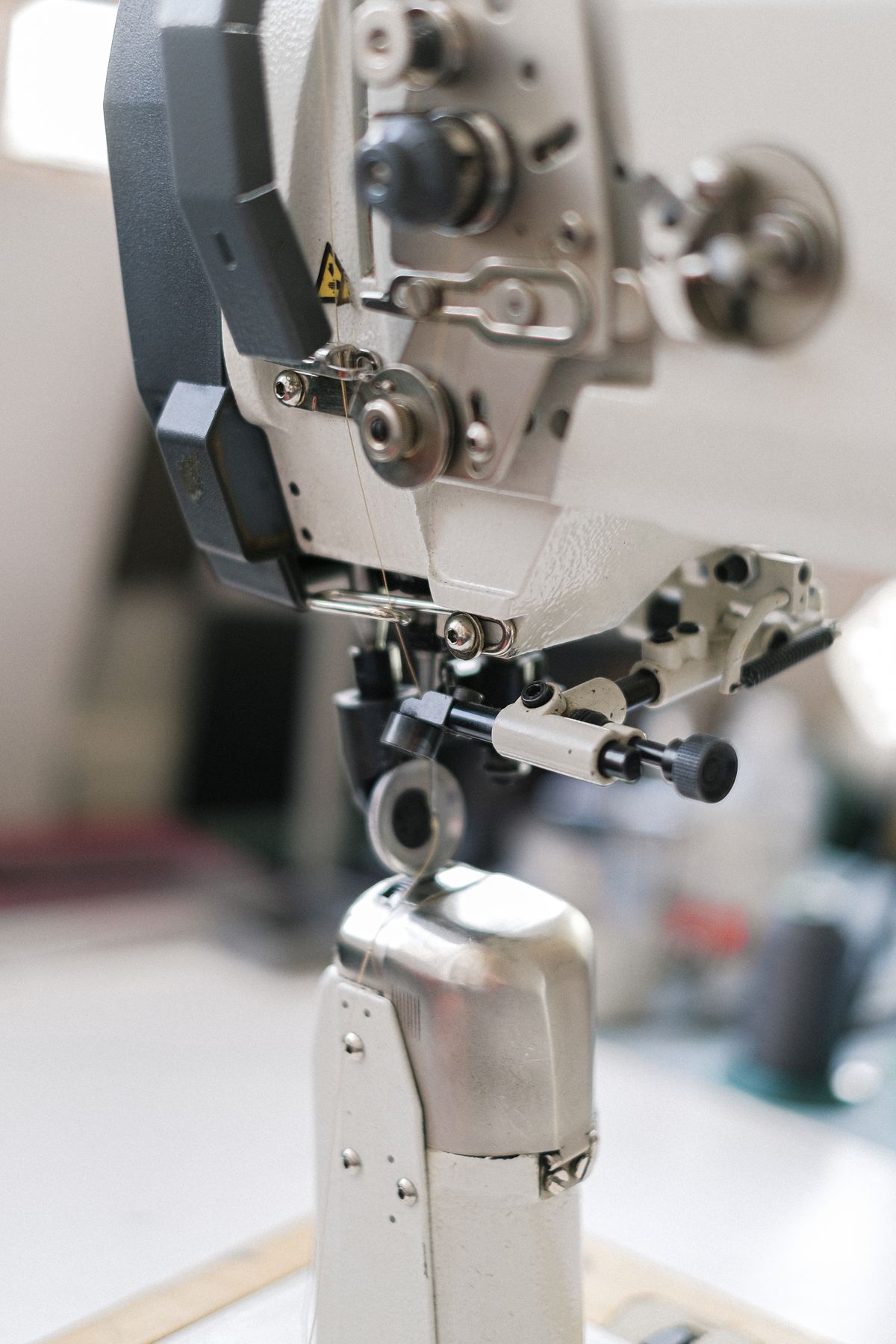
You bring the clean garment plus the shoes and belt you'll actually wear with it, put it on, and the tailor pins what's wrong while you stand there. You describe what bothers you in plain words; they propose the fix. Most jobs — a hem, a waist, a sleeve — run roughly $15–40 depending on your city, and take a few days.
That's the whole thing. No membership, no ritual, no expectation that you already know the vocabulary. An alterations shop is a service business, like a key cutter or a shoe repair. You walk in with a bag.
The reason first-timers hesitate isn't price — it's a suspicion that tailoring is for other people, people who own suits and know what a canvas is. It isn't. The most common job in any alterations shop is hemming trousers someone bought off a rack an hour ago, and the second most common is taking in a waist. Ordinary clothes, ordinary problems.
And it's the highest-leverage money in your wardrobe by a distance. Off-the-rack clothes are scaled from one sample size in a process that adds width fast and length slowly — the reason nothing ever fits is the grading, not your body. A $25 alteration finishes the job the factory couldn't, on a garment you already own.
What should I bring to the appointment?
Bring the garment clean — most shops won't work on unwashed clothes, and fabric shifts after a first wash, so a hem pinned on an unshrunk garment can be wrong later. Bring the shoes you'll wear it with, and the belt. Hem length is measured against shoe height, so heels versus flats changes the answer by an inch or more.
If it's trousers, wear or bring whatever you'd normally have on underneath — underwear, tights, a tucked shirt. A waist pinned over one set of layers sits differently over another, and that gap is exactly the amount that makes a garment feel wrong without you knowing why.
The most useful thing you can bring is a garment that already fits you well. Not to copy exactly, but as a reference: it lets you point instead of explain. This is the length I like. This is how loose I want a sleeve. A tailor can measure it flat in thirty seconds and match numbers — far more reliable than either of you guessing from a description.
What do I actually say?
Say what fits, then say what doesn't, then stop talking. Something like: "The shoulders fit, but it's loose through the waist — can you take it in?" That's a complete, useful sentence. You've told them the fixed point, the problem, and left the method to them. Then add what you'll wear it for — work, a wedding, every day — because that changes how much room they leave.
The single best question is "what would you do?" A good tailor will tell you when something isn't worth altering, and that answer is worth the trip on its own. They'll also catch what you didn't mention: a sleeve that binds when you reach, a rise sitting low enough that no waist adjustment will save it.
Resist prescribing the fix. "Take an inch off each side seam" sounds knowledgeable and often isn't what the garment needs — the excess might sit in the back, or want a dart instead. Describe the symptom, not the surgery. It's the same conversation you'd have with a mechanic, and nobody feels underqualified for that one.
What does it cost?
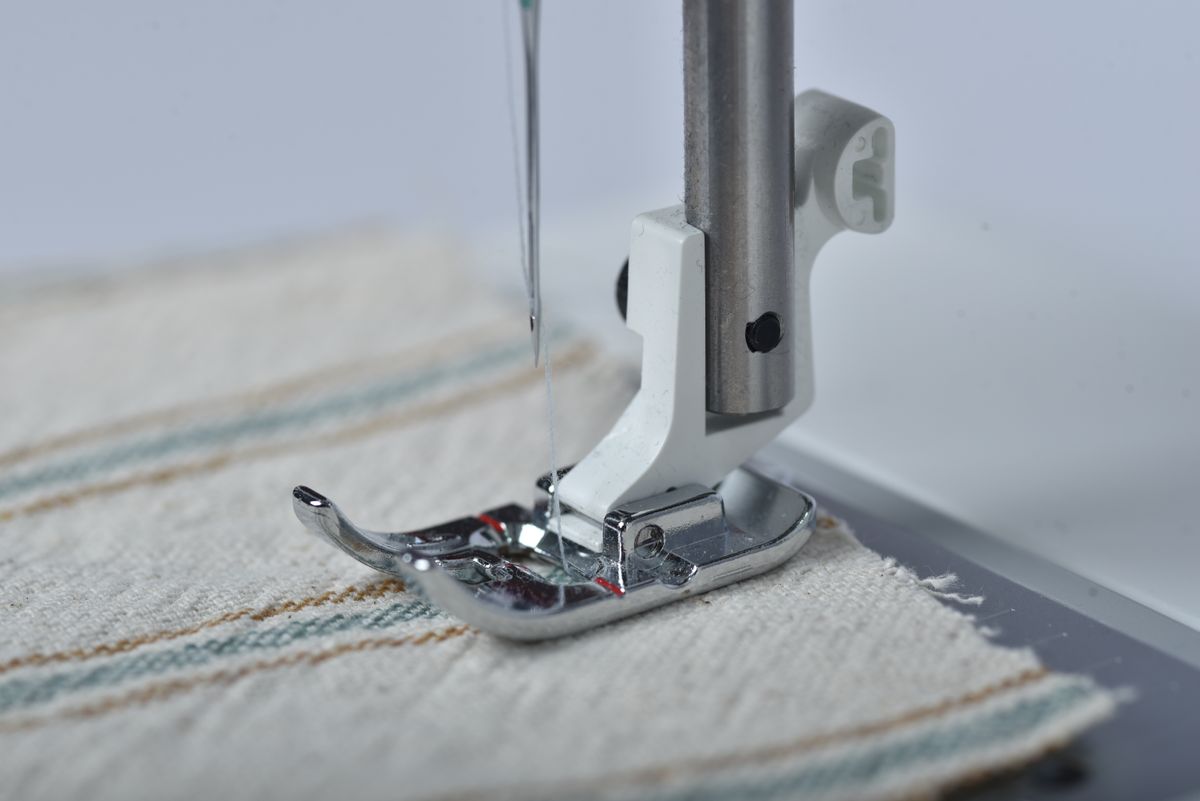
Approximate, and genuinely variable by city — a major-metro shop can charge double a small-town one, so treat these as orientation, not quotes. Hemming trousers, roughly $15–25. Taking in a waist, around $15–30. Shortening sleeves from the cuff, about $20–40. Taking in the sides of a shirt, roughly $20–30. Ask for a price before you leave the garment; every shop will give you one.
Then there's the cliff. Shoulder alterations on a jacket often start around $75 and climb, because the shoulder isn't a seam you nip — it means detaching the sleeve, reworking the structure underneath, and rebuilding the garment around a new point. On a mid-priced jacket that can approach what you paid.
Which gives you the rule that changes how you shop: buy for the measurement that can't be altered, and alter the rest. Shoulders and armhole depth are the expensive-to-impossible ones. Waist, length, sleeves and sides are cheap. So in the fitting room you're checking shoulders first and ignoring how absurd the waist looks — that's a $20 problem. It's the same logic behind choosing petite or regular by proportion rather than size: match the structure, adjust the edges.
What can't be altered?
You can take fabric away but you can't add it. Nothing lengthens beyond the seam allowance already folded inside — usually an inch or two on a hem, often less on a sleeve. Shoulders are structural. Armhole depth is effectively fixed, because raising it means recutting sleeve and body together.
This is why the awkward cases stay awkward. If your waist and hips differ more than a pattern assumes, sizing up gives fabric everywhere at once, and a tailor can remove some of it but can't reintroduce shape the pattern never had — the mechanic behind waist-to-hip difference and off-the-rack fit. Removal is easy. Addition is a new garment.
How do I know if they did a good job?
Try it on before you leave if the shop lets you. Check three things: the seam lies flat with no puckering along the stitch line, the alteration is symmetrical side to side, and the fabric hangs straight rather than twisting toward the new seam. Then move — sit down, reach forward, cross your arms. A garment that only works standing still isn't finished.
If something's off, say so there and then. Reputable shops expect a second fitting and will redo their own work; it's normal, not a complaint. And once a tailor has measured you, every future job gets faster.
Here's what all of it actually buys, and it isn't attractiveness. It's attention. A garment that pulls, gapes or slides needs managing, and every small adjustment is a withdrawal from the attention you'd otherwise spend on the person in front of you. Nobody notices a well-set sleeve. They notice that you keep tugging one.
Ready to spend that attention on people worth it? Snaptle connects you with real, moderated, verified-real people by shared interest, then lets you take it to Snapchat — so the version of you that isn't adjusting a hem is the one who shows up. It's a connection app, not a dating app: 18+, free on iOS and the web.
Find your people on Snaptle
A free way to connect with creators, grow your audience, and make real friends — no pressure, just good company.