Style & Presence · August 1, 2026 · 6 min read
How Should a T-Shirt Fit? The Four Seams That Decide Everything
Shoulder, chest, sleeve, hem. Four checkpoints decide whether a t-shirt fits, and only one of them can't be fixed after you buy it.
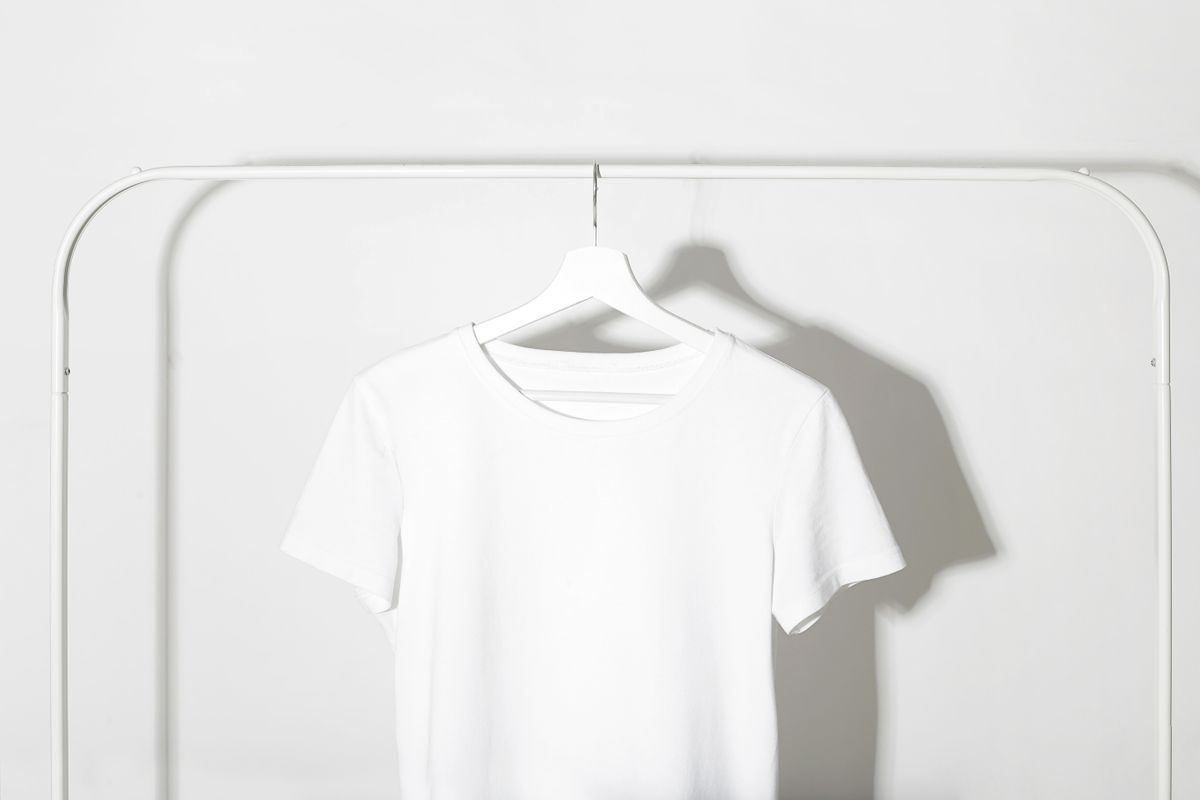
A t-shirt fits when 4 things are true: the shoulder seam sits on your shoulder bone, there's about 2 inches of total room through the chest, the sleeve ends around mid-bicep, and the hem falls around mid-fly. Buy for the shoulder — it's the only one of the four a tailor can't cheaply fix.
That's the whole test, and it takes a minute in a fitting room. What makes it useful is the ranking: the four aren't equally important, because they're not equally fixable. Three sit at the edges of the garment. One is structural.
Most people shop the opposite way round — buy the tee whose body looks right, hope the shoulders sort themselves out. They never do. A seam sitting an inch down your arm is visible across a room. A chest two inches too wide is a fifteen-minute alteration nobody will ever know happened.
None of this is a verdict on your build. A tee that doesn't work was cut for a fit model whose proportions aren't yours, then scaled mechanically to reach your size — the mechanic behind why nothing ever seems to fit. The garment is what has a shape problem. You're the one standing in it.
And the reason to bother isn't appearance. It's attention. A tee you keep tugging down is a tee you're thinking about, and every tug is a half-second spent on yourself instead of the person in front of you.
Where should the shoulder seam sit?
Directly on your shoulder bone — the point where the top of your arm meets your torso. Put a finger on that knob and the seam should land on it, or within a centimetre. Down the arm means the tee is too big; riding up and pulling means it's too small. This is checkpoint one because it's the one you can't buy your way out of later.
The shoulder is where the whole garment hangs from. Get it right and the sleeve falls cleanly, the chest drapes, the side seams run straight down. Get it wrong and everything below is compensating: wrinkles in the sleeve head, a binding armhole, a body that twists as you move. Check it arms down — not in the shrug people do in mirrors.
How much room should there be in the chest?
Roughly 2 inches of total room — meaning the shirt's chest measurement is about 2 inches larger than yours. The practical test: standing relaxed, pinch the fabric at your side, just under the armpit. You should be able to grab a couple of fingers' worth of slack on each side. No slack means it's pulling. A fistful means you're wearing a tent.
That 2 inches is the standard-fit answer. Anything roomier is volume you're adding on purpose — worth knowing you're buying it rather than discovering it at home. Both extremes fail the same way: fabric that draws attention to itself. Watch for horizontal creases radiating from the armpit or across the upper back. They don't settle with wear and they don't wash out.
Where should the sleeve end?
Around mid-bicep for a standard tee — roughly halfway between your shoulder point and your elbow. That's the length that reads as deliberate on nearly everyone. Shorter is a style choice, longer starts to look like a hand-me-down, and a sleeve that reaches the elbow makes the arm look like it's disappearing into the shirt rather than coming out of it.
Width matters as much as length. The opening should skim your arm with a little air in it — too tight and you feel it every time you reach for something; too loose and it swings when you move. Sleeves are cheap to change, which is why this is checkpoint three. Shoulder right and sleeve wrong is a fixable tee. The reverse isn't.
How long should the hem be?
Around mid-fly — covering your waistband with a comfortable overlap, roughly two to three inches below the top of your trousers. That length stays put when you raise your arms, which is the actual job. A hem that only just reaches the waistband will expose a strip of skin every time you reach for a shelf, and you'll spend the evening pulling it back down.
Too long is its own problem: a hem well past mid-fly reads as borrowed, especially under a jacket where the extra peeks out. If you tuck, none of this matters much; if you don't, it matters more than sleeve length. Test it properly — raise both arms overhead, bring them down, see where the hem settled.
What can a tailor fix and what can't they?
Cheap and routine: taking in the side seams, shortening sleeves, shortening the hem, tapering the waist. All four sit at the edges of the garment, where a tailor can open a seam, remove fabric and close it again without touching how the shirt is built. Expensive and rarely worth it: the shoulders. Narrowing one means detaching the sleeve, recutting the shoulder line and reattaching to a new armhole — rebuilding the garment, not adjusting it.
That asymmetry is the whole shopping strategy: buy for the shoulder even if the body looks too wide, then pay someone to take the sides in. If you've never done it, a first trip to a tailor is far less intimidating than it sounds — you're asking for the most ordinary work they do. One caveat with knits: jersey stretches, so ask whether they have the right machine.
Run the four checks in that order
Shoulder, chest, sleeve, hem — and stop caring about the label. The number on the tag is a brand's internal shorthand, not a measurement, and the same mismatch runs through the rest of your wardrobe, which is really a question of proportion rather than size.
What you get from a tee that passes all four isn't a different body. It's a garment you stop noticing. No hitching the hem, no rolling the sleeve, no checking the mirror on the way past. All the attention that was going to fabric management goes back into the room — into what someone just said, into the thing you were about to say next. That's the real cost of clothes that don't fit: not attractiveness, presence.
Want somewhere worth showing up to? Snaptle connects you with real, moderated, verified-real people by shared interest, then lets you take it to Snapchat — so the version of you that isn't tugging a hem gets to do the talking. It's a connection app, not a dating app: 18+, free on iOS and the web.
Find your people on Snaptle
A free way to connect with creators, grow your audience, and make real friends — no pressure, just good company.