Style & Presence · August 1, 2026 · 6 min read
Why Are Your Shirts Always Too Short? A Guide for Tall Frames
Brands scale clothes wider much faster than they scale them longer. That's why the shirt that fits your shoulders still rides up when you move.
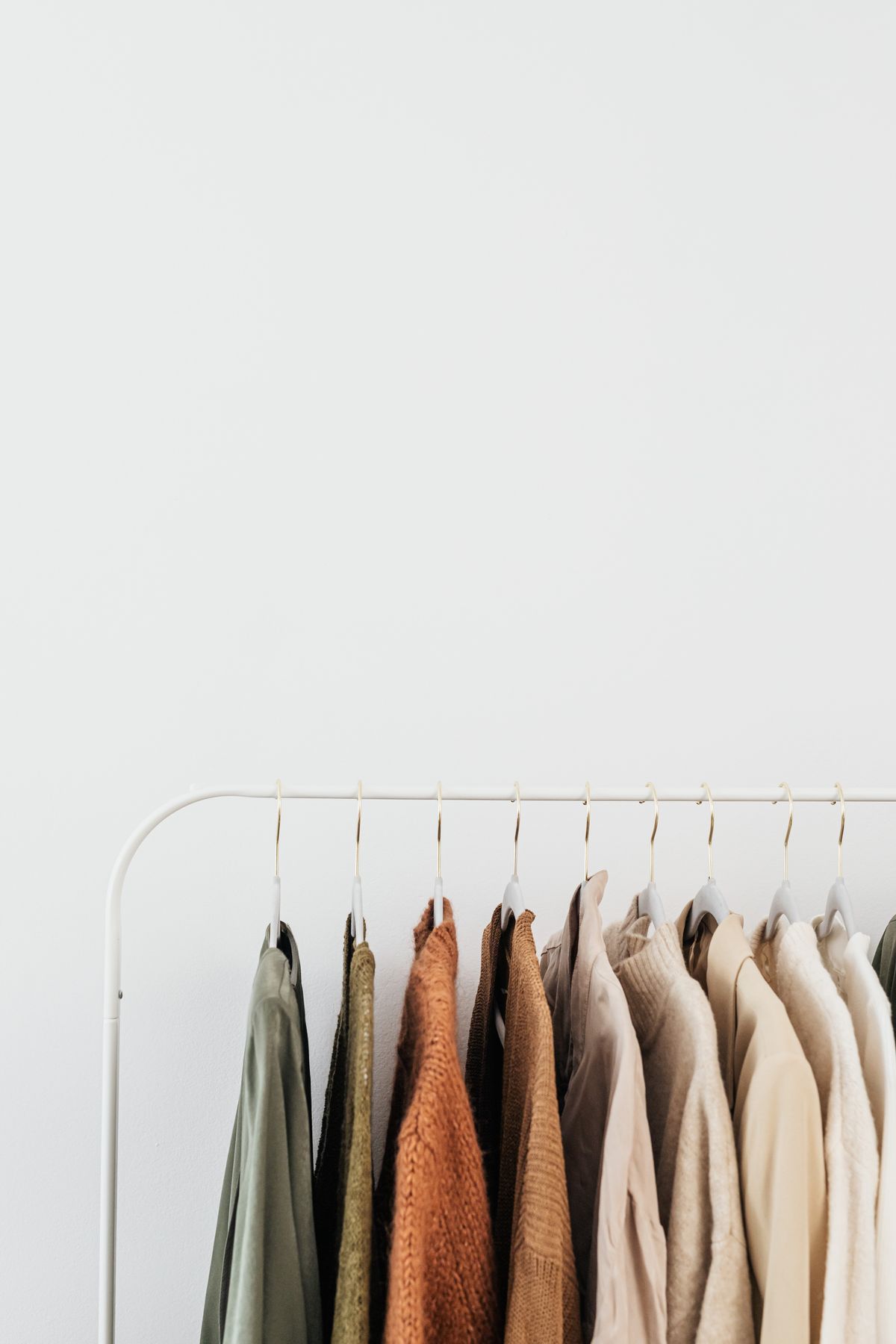
Because a brand drafts one sample size and then grades every other size off it — and grading scales circumference generously while scaling length barely at all. Step from a large to an extra-large and you might gain 5 cm around the chest but only 1 to 2 cm of body length. The shirt gets wider, not longer.
Sit with that for a second, because it moves the blame. You have probably spent years assuming your torso is oddly long or your arms are strangely built. None of that is happening — a standard-size shirt is drafted around proportions that aren't yours, then stretched sideways and sold as a solution. The full mechanics of how one pattern becomes a whole size run are in why nothing ever fits.
You feel it in small ways all day. The hem creeps out when you reach for a high shelf. You sit down and the back slides up. You do the discreet tug — thumb and forefinger, hem, down — without registering it.
Here's the part that actually matters, and it has nothing to do with how you look. Every one of those tugs is a micro-interruption: you're mid-sentence with someone and a sliver of your attention peels off to manage a garment. Do that across a whole conversation and you're less present — not less attractive, less there. Badly fitting clothes cost you attention, the only thing you really have to give another person.
Why does going up a size not fix it?
Because the extra size is spent almost entirely on width. Grading puts most of its increment into chest, waist and hip circumference, and gives length a token bump. The XL you bought to gain 2 cm of hem also handed you 5 cm of chest you didn't want: a shirt that billows at the body and is still short.
This is the trap that keeps tall frames cycling through sizes forever. It feels like it should work — bigger is bigger, right? But the two dimensions aren't scaled at the same rate, so climbing the size run never closes the gap. Eventually the shirt is comically wide at the ribs, the shoulder seam has slid down your upper arm, and the hem has moved maybe three centimetres. The shape problem belongs to the pattern, not to you.
What is "tall" sizing actually changing?
A "tall" size isn't a normal size stretched. It's a separate draft: the body is cut longer, the sleeve is cut longer, and — the part people miss — the armhole is dropped and the chest pocket moved down to sit correctly on a longer torso. Those last two are structural. A regular size cannot replicate them at any width.
That's why a tall shirt in your correct chest measurement feels startlingly different from an oversized regular. The armhole lands where your arm actually meets your shoulder, so raising your arm lifts the sleeve instead of dragging the whole body of the shirt up with it. The side seams run straight down instead of pulling diagonally. The pocket sits on your chest, not near your stomach. Once you've worn one, "just size up" is obviously wrong — it was never solving the same problem.
How do I know if a shirt is long enough?
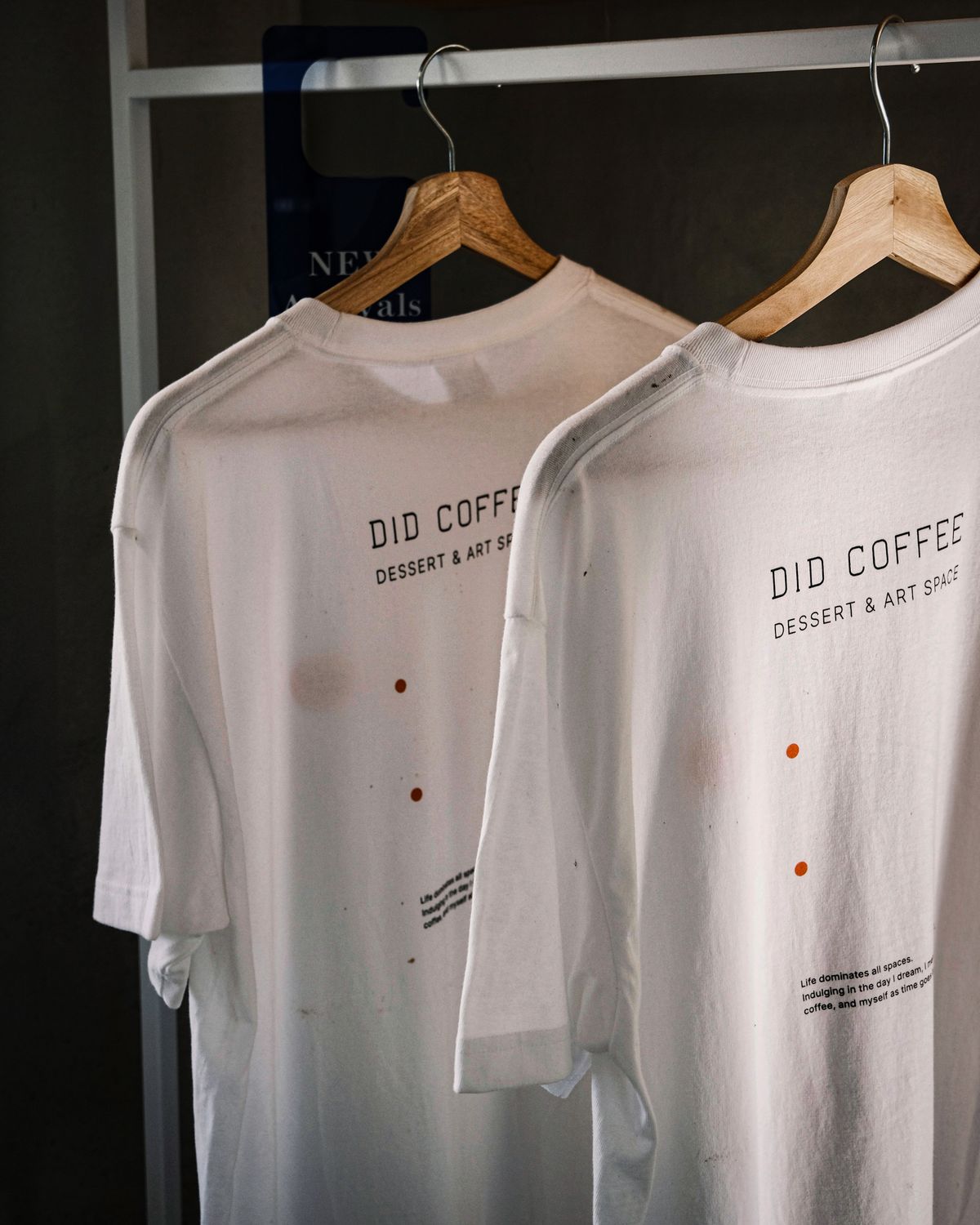
Raise both arms straight overhead. If the hem lifts clear of your waistband, the shirt is short for you — no judgement call needed. A shirt should stay tucked, or stay covering, through the entire range of ordinary movement: reaching, sitting, leaning across a table, putting on a jacket. If it only works while you stand still, it doesn't work. Do it in the fitting room, first, before anything else — it takes three seconds and beats any size chart, because it tests the garment against your body instead of against a number.
A decent hem drop buys tolerance. A shirt that stays where you put it disappears from your awareness completely — that's the goal, not a silhouette. Same logic as how a t-shirt should actually fit: the right fit is the one you stop noticing.
What about sleeve length?
For a long-sleeve shirt, the cuff should reach the base of your thumb — the crease where your hand meets your wrist. If it lands mid-forearm while the chest fits fine, that's a grading artifact, the same one shortening the body. Sleeve length scales up slowly across sizes for exactly the reason hem length does.
"Short-arm syndrome" is not a thing you have. It's a thing that happens to standard-size shirts on longer arms, for a boring industrial reason. The sleeve simply wasn't drafted for a body your height, and going up a size widens it long before it lengthens it. Tall drafts fix this in the same stroke as the body length.
What can a tailor do here?
A tailor can shorten. A tailor essentially cannot lengthen, because there's no fabric to add — the hem allowance in a finished shirt is a centimetre or two, and letting it out gains almost nothing and leaves a crease line. That inverts the standard advice, which assumes buying roomy and altering down.
So the buying decision carries far more weight for you than for most people. For an average frame, a too-big shirt is fixable — a tailor takes in the sides, shortens the sleeves, done. That route is worth knowing; your first trip to a tailor is less intimidating than it sounds. But it runs backwards for you: you cannot alter your way out of a shirt that's too short.
What a tailor can do is take an over-wide tall shirt and slim the body. That's the workable combination: buy for length, alter for width.
The one-line version
Buy for length first, because length can't be added afterwards. Everything else is negotiable with a needle. And when the hem stays put, the low-level management of your own clothing stops, and that reclaimed attention goes back where it belongs: on the person in front of you, on what they're saying, on actually being in the room. You were never the problem. The pattern was.
Ready to be seen by the right people? Snaptle connects you with real, moderated, verified-real people by shared interest, then lets you take it to Snapchat — so the version of you that shows up is the one that isn't thinking about a hem. It's a connection app, not a dating app: 18+, free on iOS and the web. Wear something that stays where you put it, and go be present.
Find your people on Snaptle
A free way to connect with creators, grow your audience, and make real friends — no pressure, just good company.