Style & Presence · August 1, 2026 · 6 min read
The Best Jeans for Short Men: Measure Once, Stop Guessing
Inseam, rise and where the break falls decide whether jeans work on a shorter frame. Here's what to measure, and when to hem instead of sizing down.
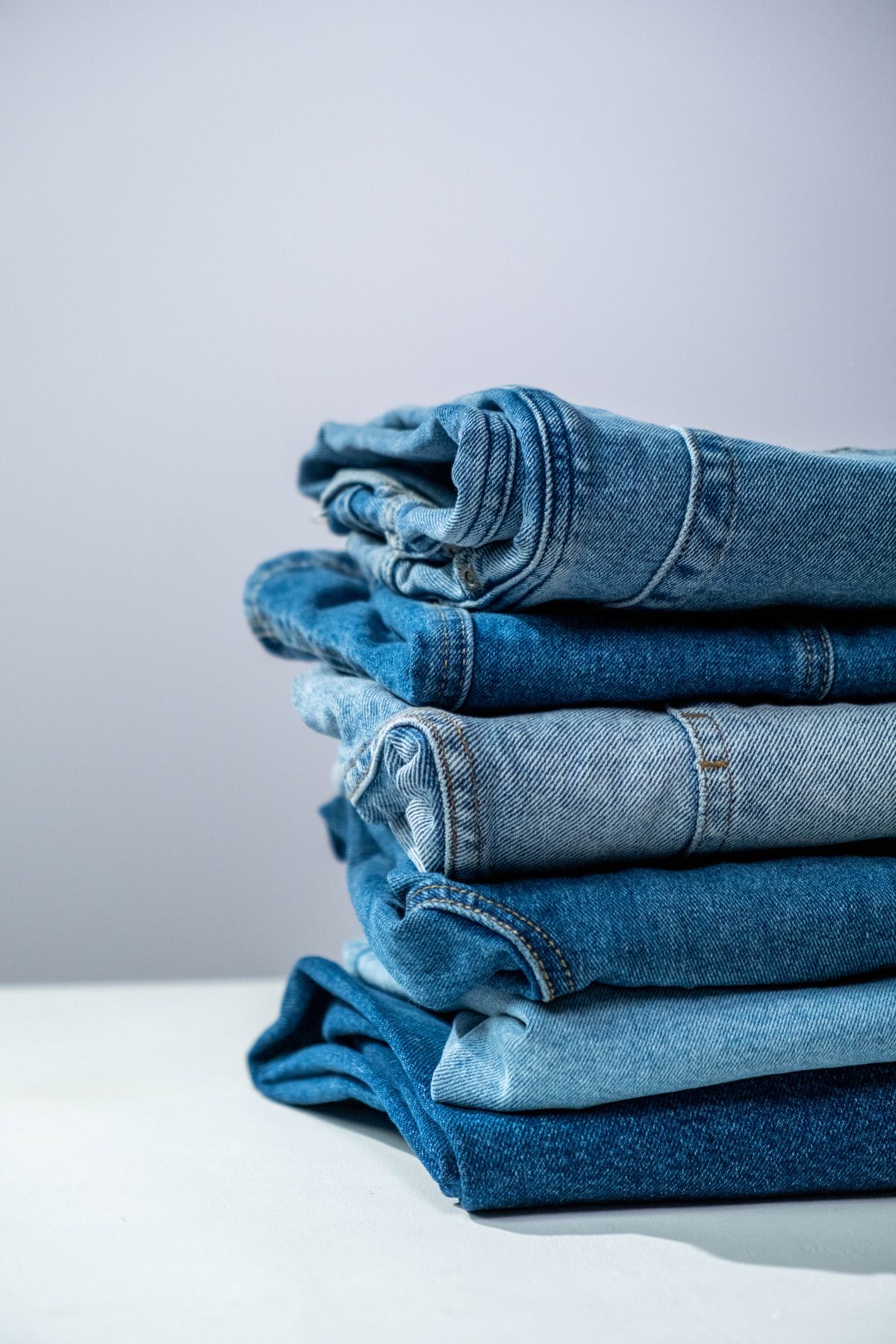
The best jeans for a shorter frame are the ones cut to your measured inseam — often 28 to 30 inches rather than the 32 that dominates the rack — with a rise that sits at your natural waist and a hem with little to no break. Measure a pair you already like, then buy or hem to that exact number.
That's the whole answer, and it's boring on purpose. Most denim frustration isn't a body problem at all — it's a manufacturing one. Off-the-rack lengths are cheap to produce, and the length brands pick is an average height that almost nobody actually is. When a pair doesn't work on you, the garment is what has the shape problem.
Here's why it keeps happening. Brands draft one sample size, then grade it up and down to make the full run. Width gets graded aggressively — waist, hip, thigh all scaled with some care — while length barely moves, or moves in two blunt steps. A 30 waist and a 38 waist end up built around a nearly identical leg. We went deep on this in why nothing ever fits, and it's the most useful thing to understand before you buy anything again.
Why bother getting this right? Not because a hem changes how attractive you are — it doesn't. It changes where your attention goes. When jeans stack at your ankles or the waistband slides down every time you sit, you spend the day quietly managing your own clothes. That's attention you're not spending on the person talking to you. Clothes that fit don't add anything; they stop taking.
What inseam do I actually need?
Take the inseam from a pair you already like. Lay them flat, measure from the crotch seam straight down to the hem, write it down. That's your number — not one calculated from your height. Two people at 5'6" can need inseams two inches apart, because torso-to-leg ratio varies wildly and nobody's legs are a fixed percentage of their height.
This is the step people skip, and the one that saves the most money. Height charts assume your legs are a predictable fraction of you — exactly the assumption that produced the badly-fitting jeans in the first place. Your own wardrobe already has the data: one pair that feels effortless tells you your inseam, your rise, and roughly the leg opening you like. Measure two or three pairs, buttoned and smoothed flat. The ones you actually wear will cluster within half an inch.
Why does rise matter more than length?
Rise is the distance from the crotch seam to the top of the waistband, and it decides where the jeans sit on your torso. Get it wrong and nothing below it can be right. A rise cut too long has nowhere to go: it bunches under the hip and behind the knee, so the leg reads as a rumpled column of fabric instead of a clean line, no matter how perfectly you hem it.
Most off-the-rack rises are drafted for that same average torso, which is why so many guys end up with a waistband floating below their natural waist. You feel it as a constant small pull-up. Try mid-rise cuts — usually 10 to 11 inches — and judge by whether the waistband stays put after twenty minutes sitting down. That's the real test, not the mirror.
Should I hem or buy a shorter inseam?
Buy the shorter inseam when it's available. A jean drafted at a 29 has the knee placed correctly for a 29 — seams, whisker lines and taper all land where they should. Hemming only removes fabric at the bottom; it can't move the knee. It's still an excellent, cheap fix at roughly $15 to $20, and it beats living with three extra inches of denim.
Ask for an original-hem finish if the wash matters to you: the tailor cuts from above the hem and reattaches the factory edge, so you keep the fade and the chain-stitch instead of an obvious fresh seam. Costs a little more, worth it on any pair you like.
If you've never handed clothes to a tailor before, it's less intimidating than it sounds — here's what the first visit is actually like. Ten minutes, a couple of pins, done by the weekend.
How much break should there be?
Break is the fold that forms where the hem meets your shoe. On a shorter frame, little to no break almost always works better: the hem sits right at the top of the shoe, just kissing it, with at most one soft fold. More than that and the fabric pools at the ankle, which is the single most visible sign that a pair was made for someone else's legs.
Check it in the shoes you actually wear, standing normally, not in socks. Sneakers and boots sit at different heights, so hem for the pair you wear most. Half an inch is a genuinely noticeable change — bring the shoes to the tailor.
Why does sizing down not work?
Because waist size and leg length are separate measurements, and dropping a waist size to chase a shorter leg gives you a waistband that digs, a thigh that grips, and a leg that's still not quite right. You've swapped one bad fit for another and added discomfort. Fix length with length: a shorter inseam, or a hem.
Sizing up to get more room somewhere specific fails the same way — the garment moves in every dimension at once, so you can't isolate the one thing you wanted. It's the trap covered in our guide to jeans by body type: fit is several independent variables wearing a single number on the label, and that number is only ever a rough opening bid.
The short version
Measure the inseam of the pair you already love. Buy that inseam where you can, hem where you can't, keep the rise at your natural waist, let the hem land at the top of your shoe. Four decisions, all measurable — which means none of them are about you. The jeans either match your numbers or they don't, and when they don't, the pattern missed.
Get it right once and the whole thing goes quiet. You stop adjusting, stop noticing, and the attention you were spending on your own waistband goes back where it belongs — on the room, and the person in front of you.
Want somewhere worth showing up to? Snaptle connects you with real, moderated, verified-real people by shared interest, then lets you take it to Snapchat when the conversation's actually going somewhere. It's a connection app, not a dating app: 18+, free on iOS and the web. Wear the jeans that fit and go find your people.
Find your people on Snaptle
A free way to connect with creators, grow your audience, and make real friends — no pressure, just good company.